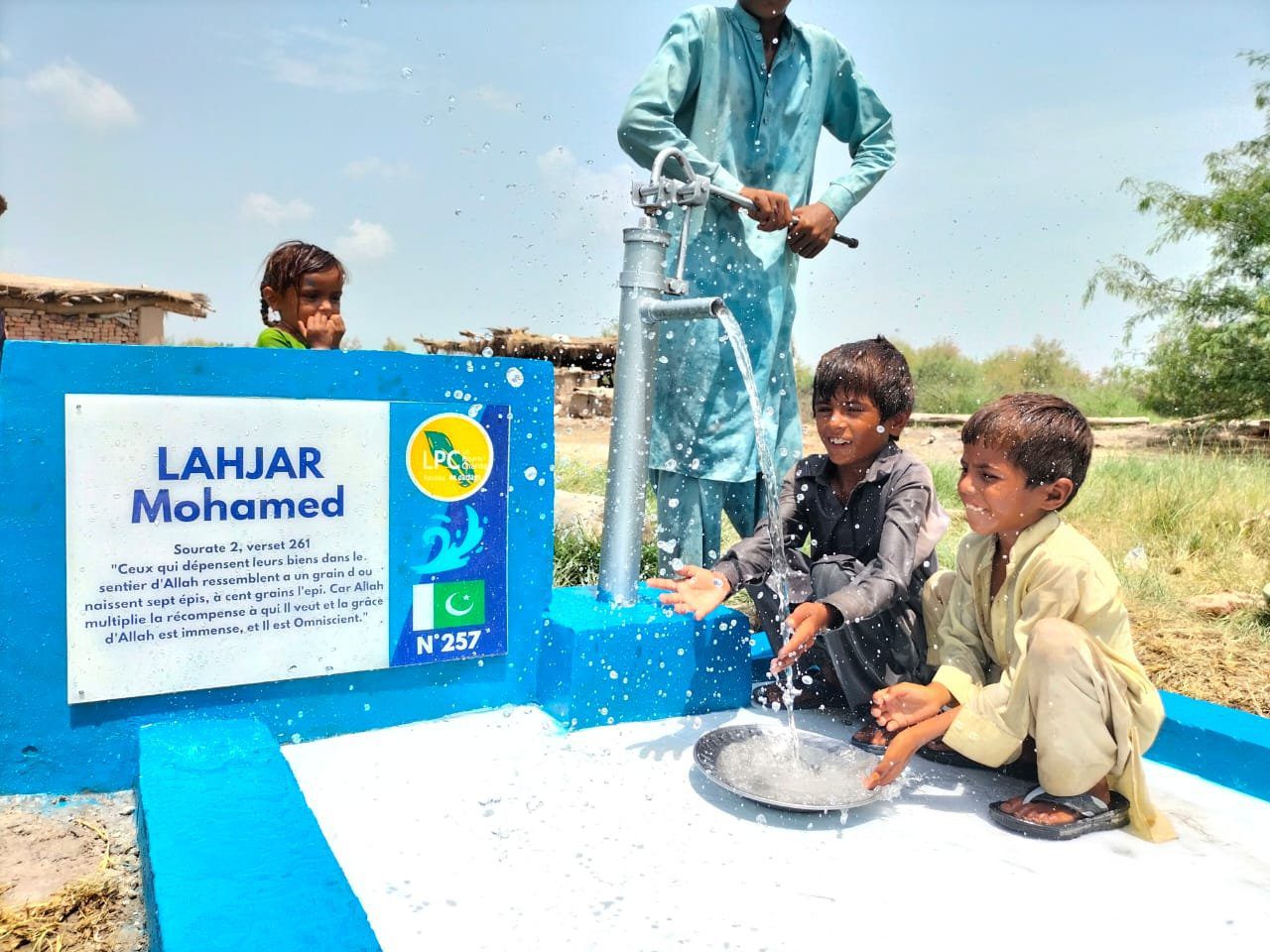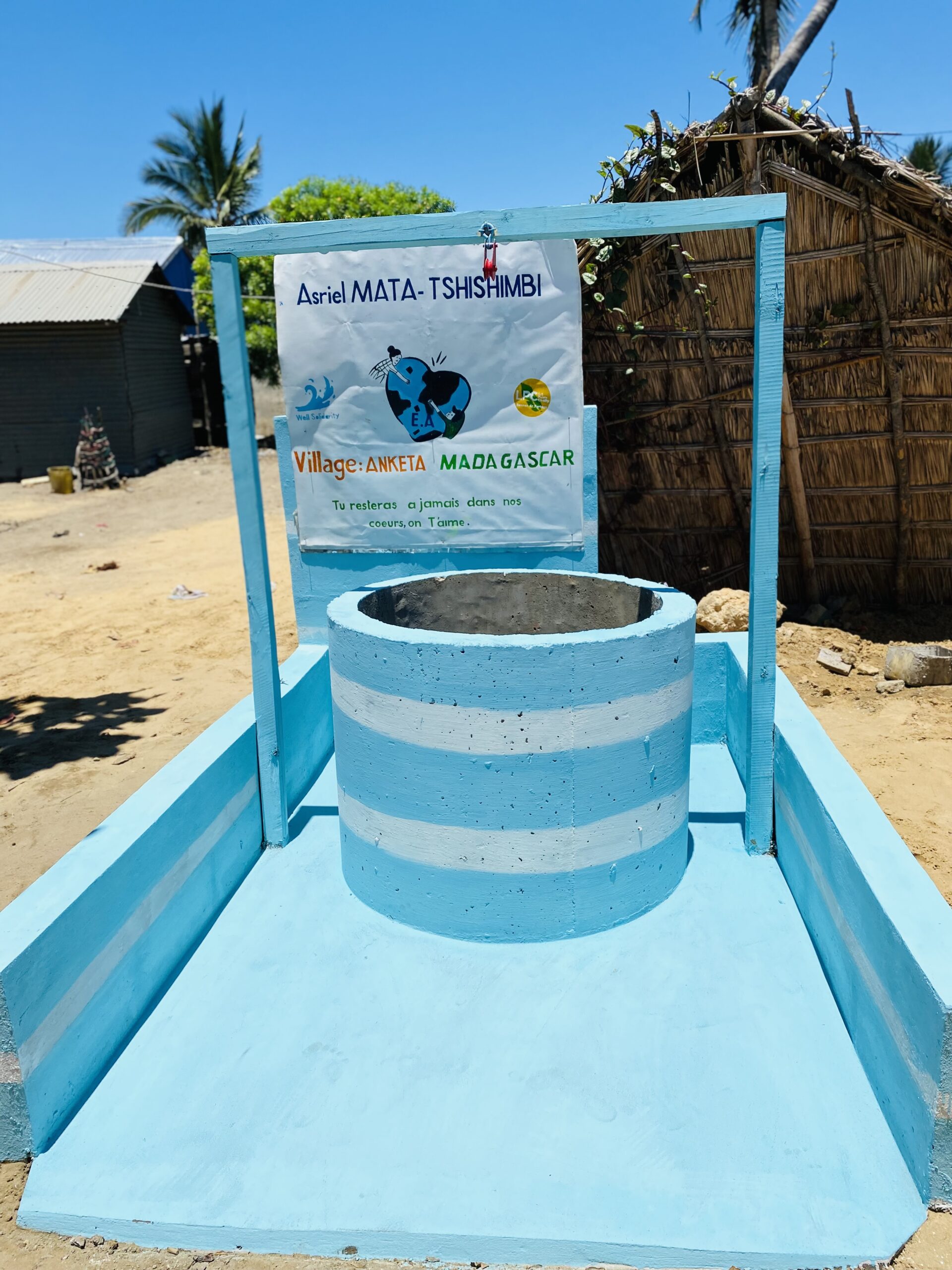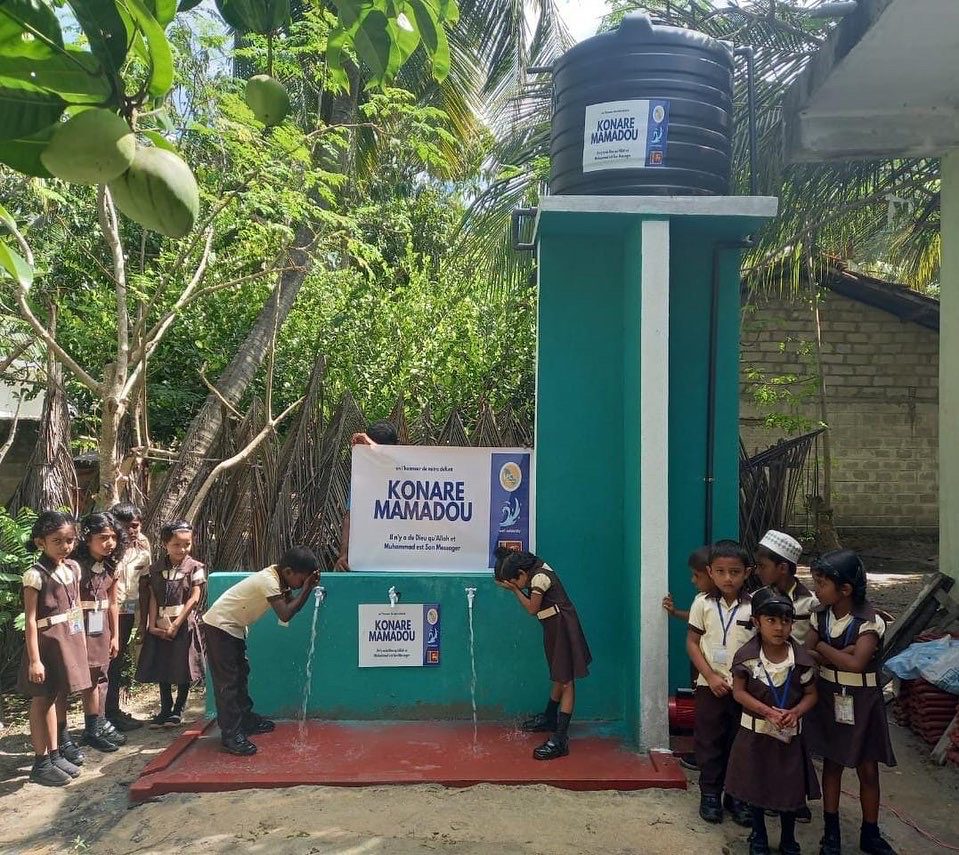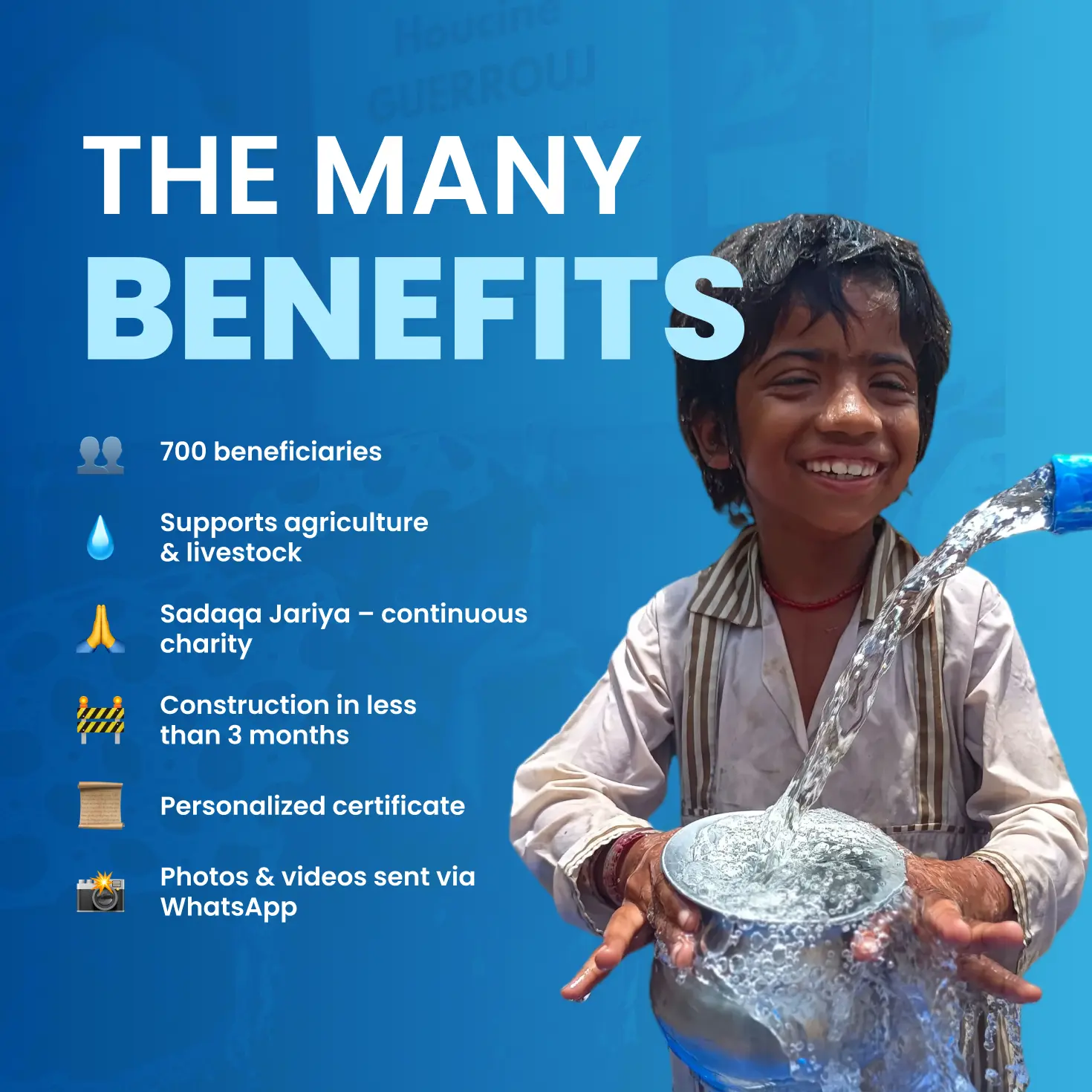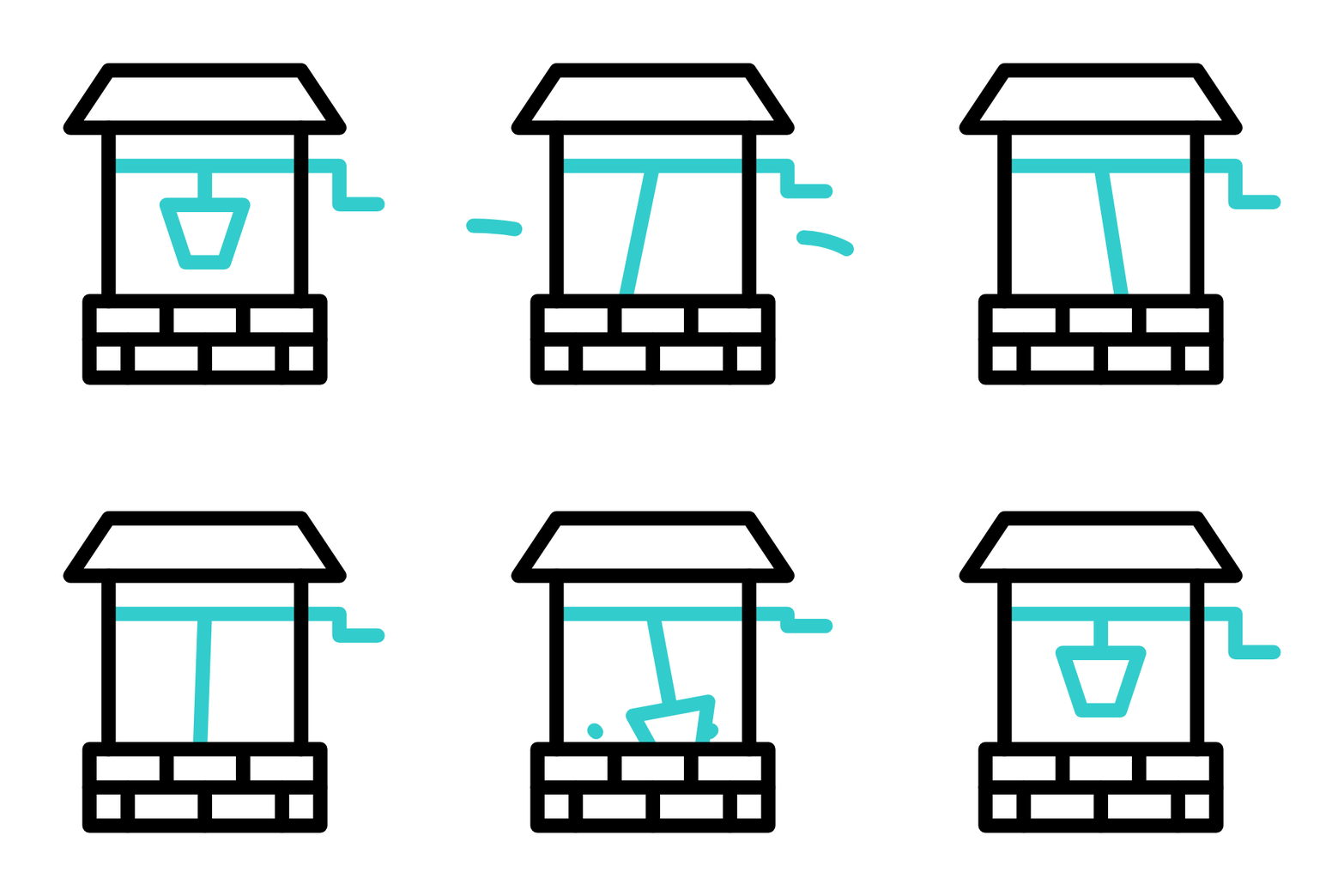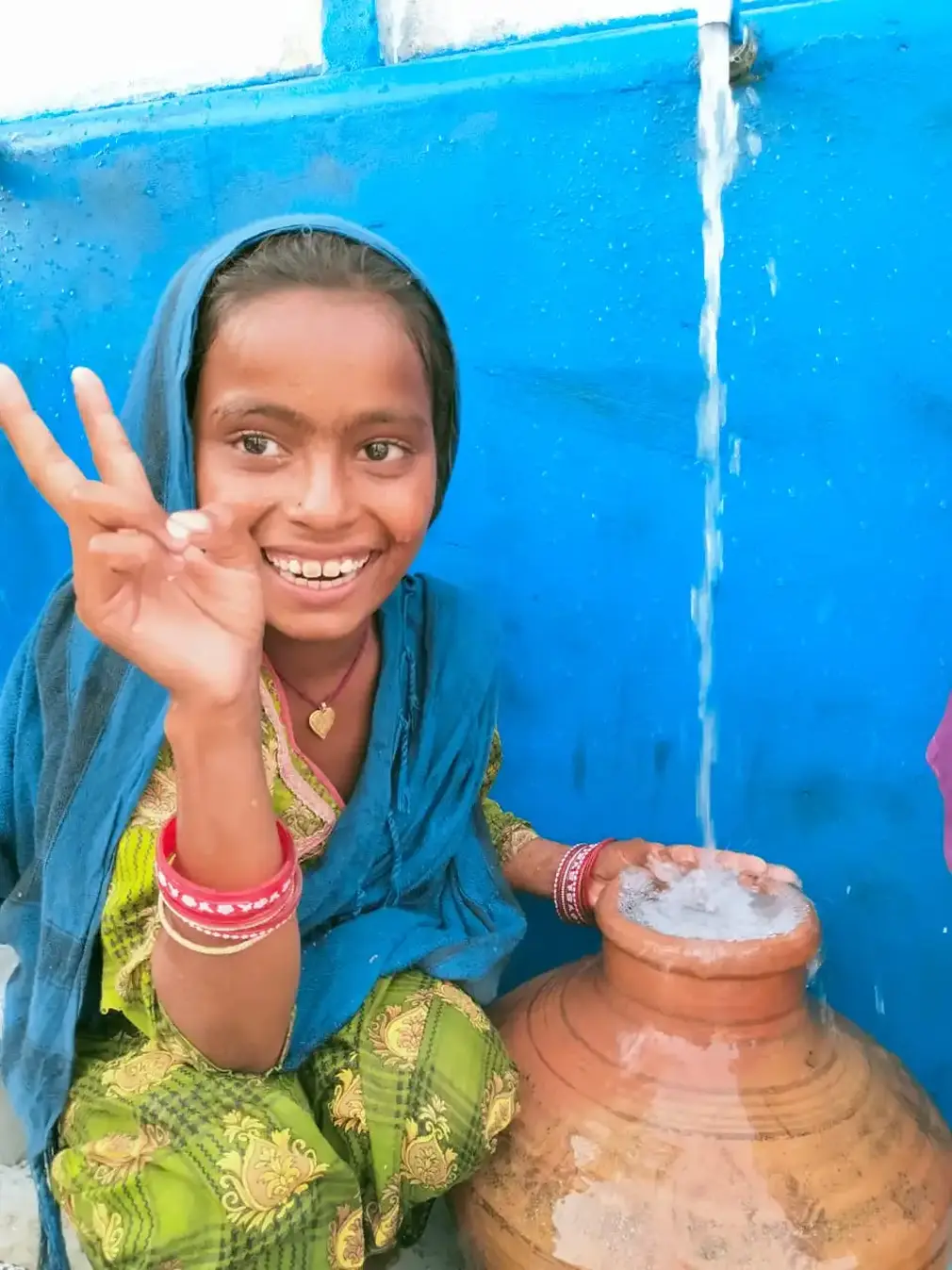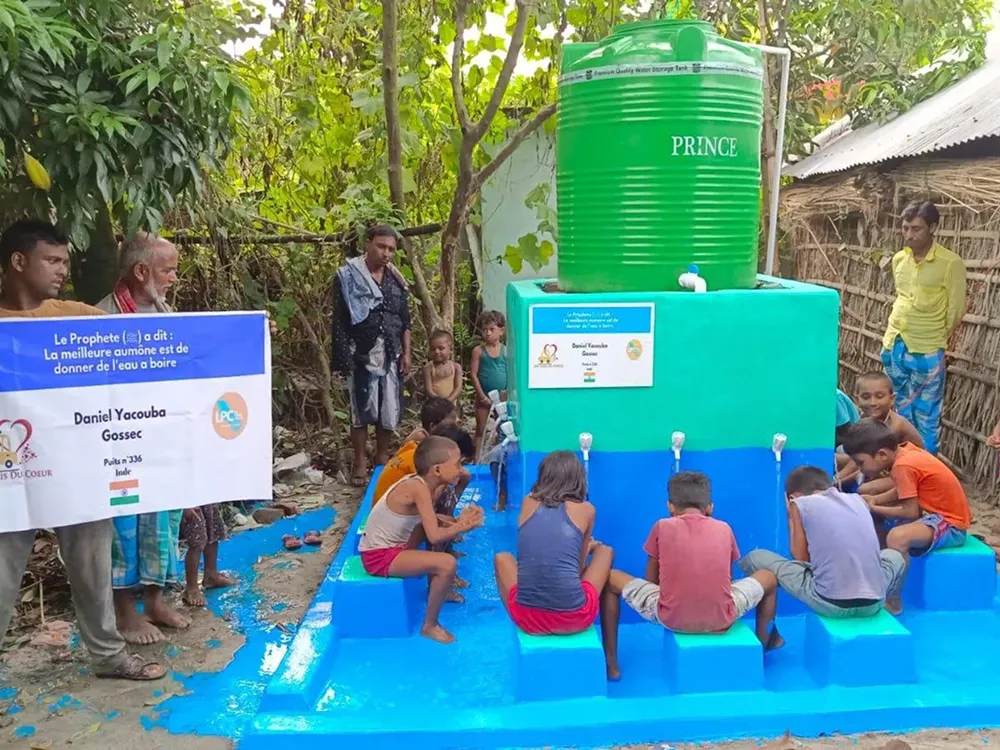

💧 Accessible and reliable drinking water: In under 3 months, the well is equipped with a manual or electric pump, providing clean water for daily use.
👥 Serving up to 700 people: Designed to supply a large number of beneficiaries, this well meets the drinking water needs of an entire community.
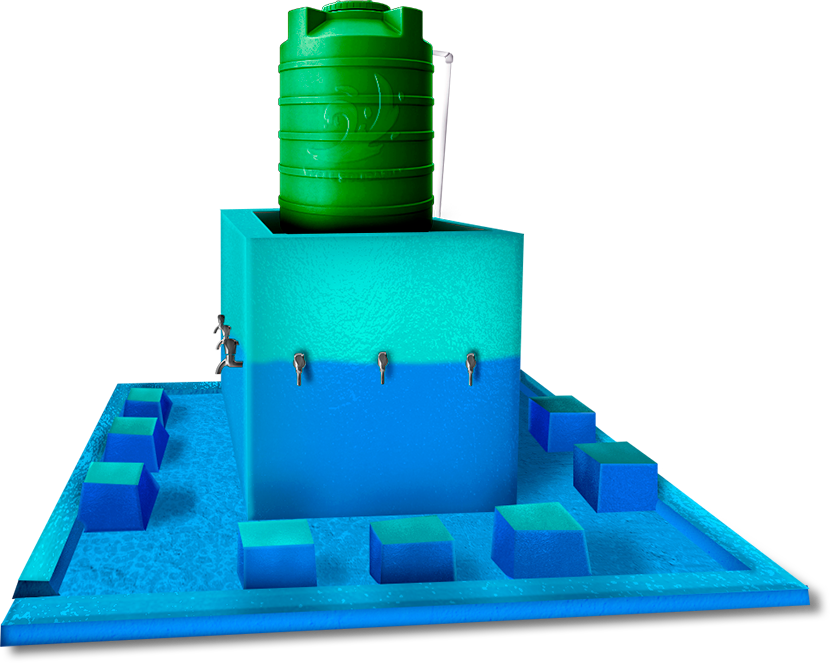
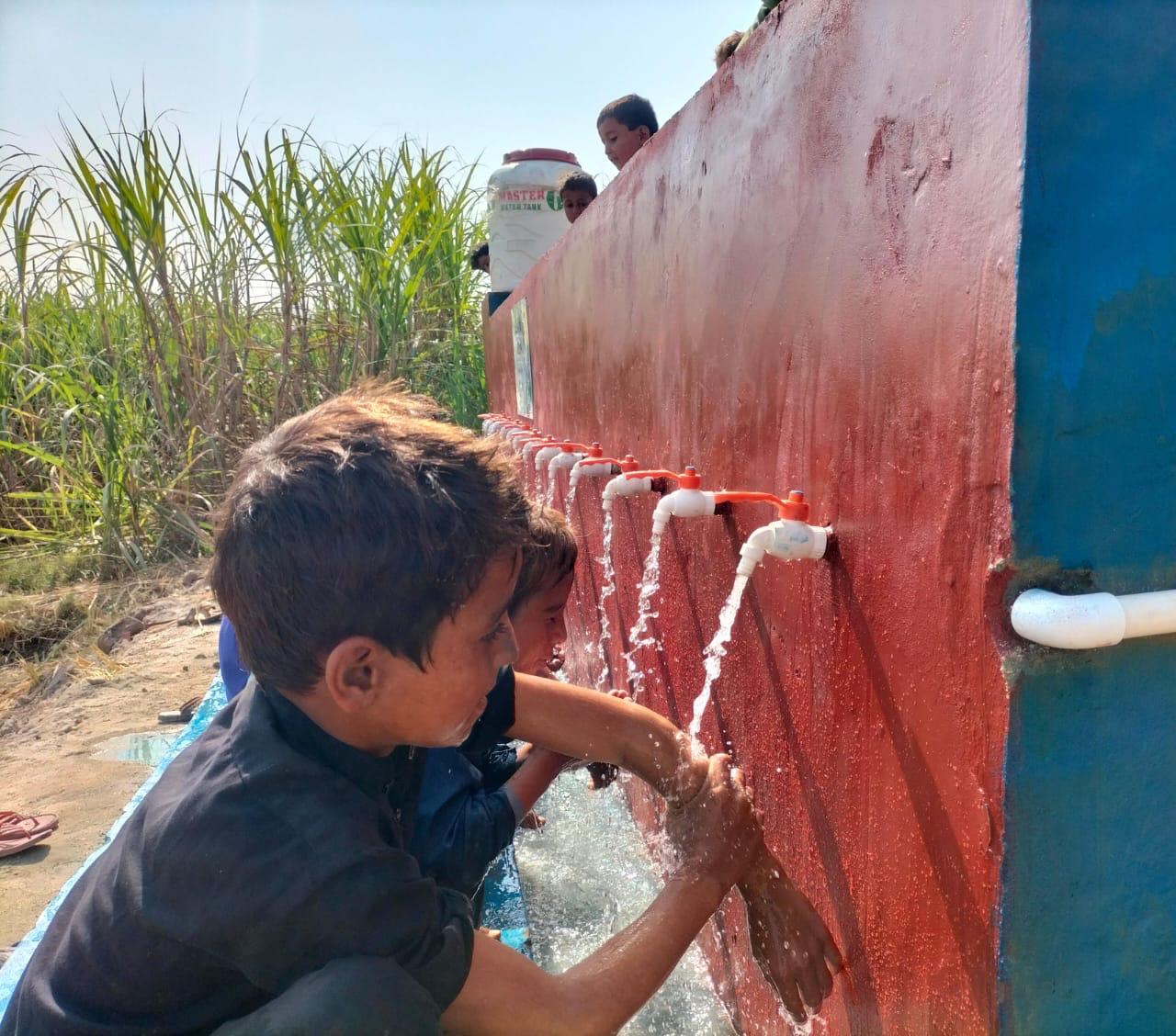
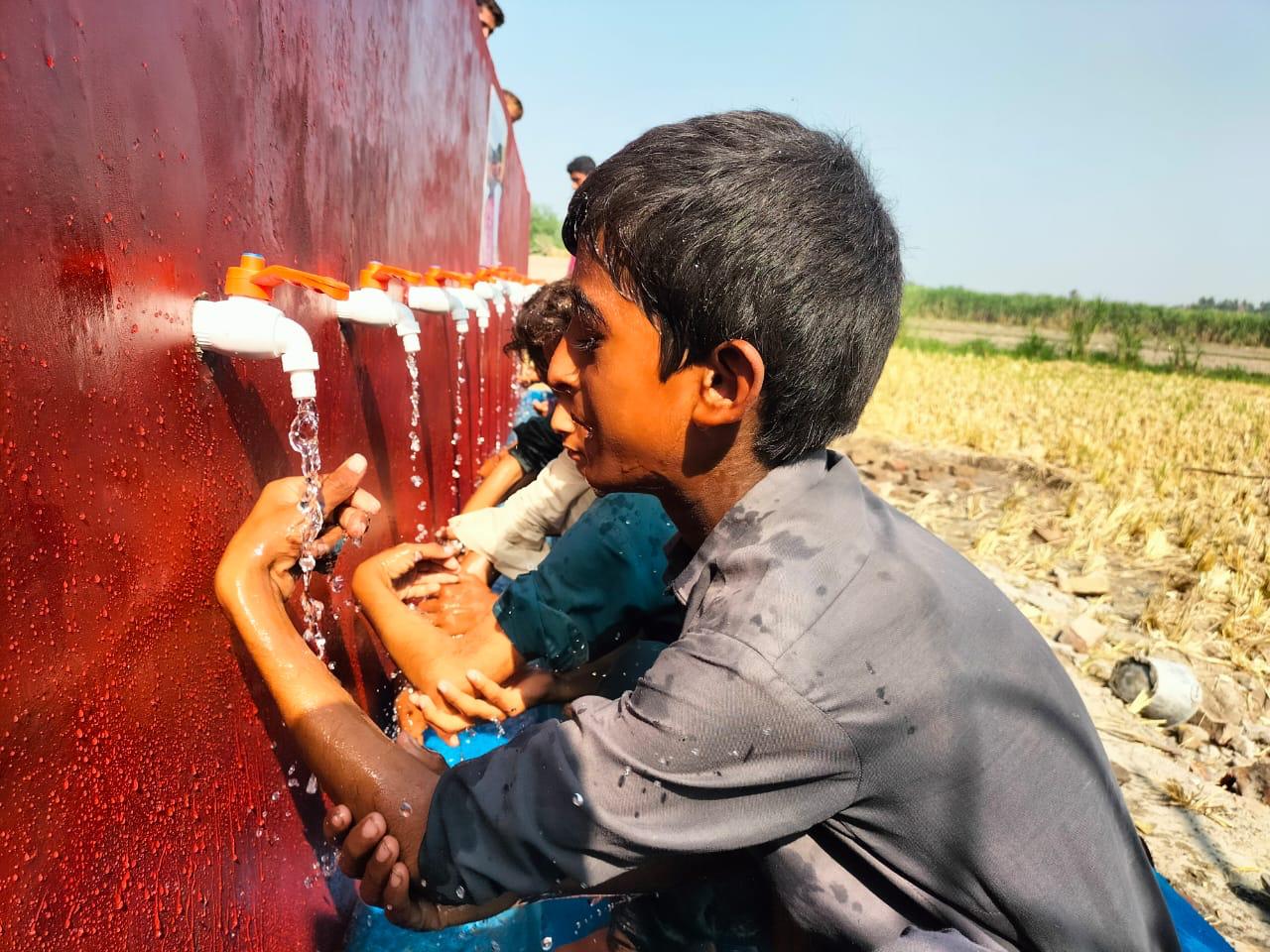
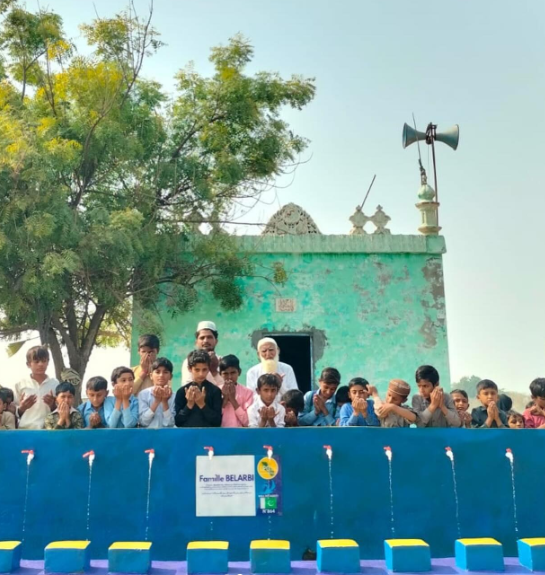
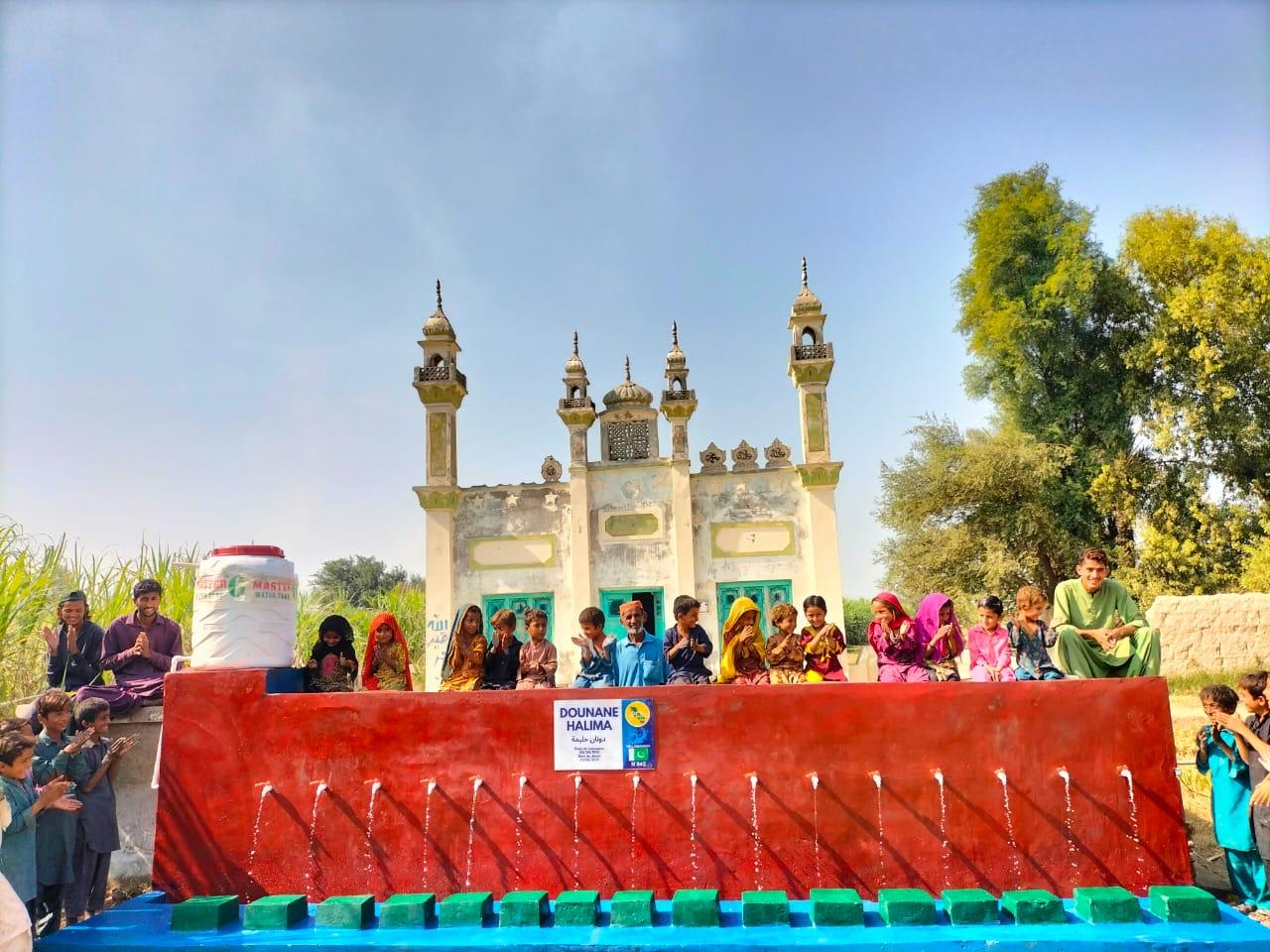
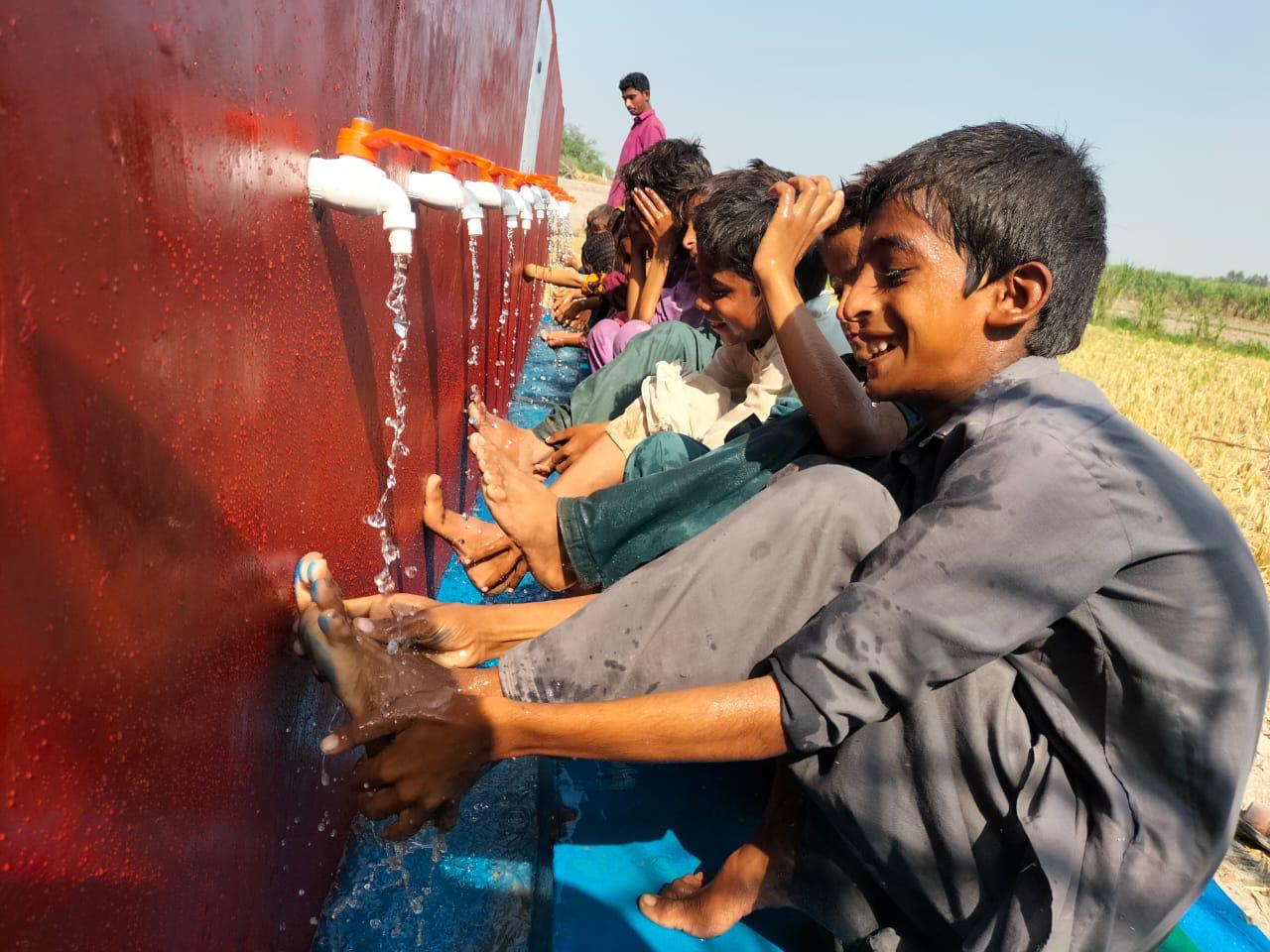
🛠️ Infrastructure suited for collective use: Equipped with 5 taps and a robust pumping system, it can serve multiple families simultaneously, reducing waiting times.
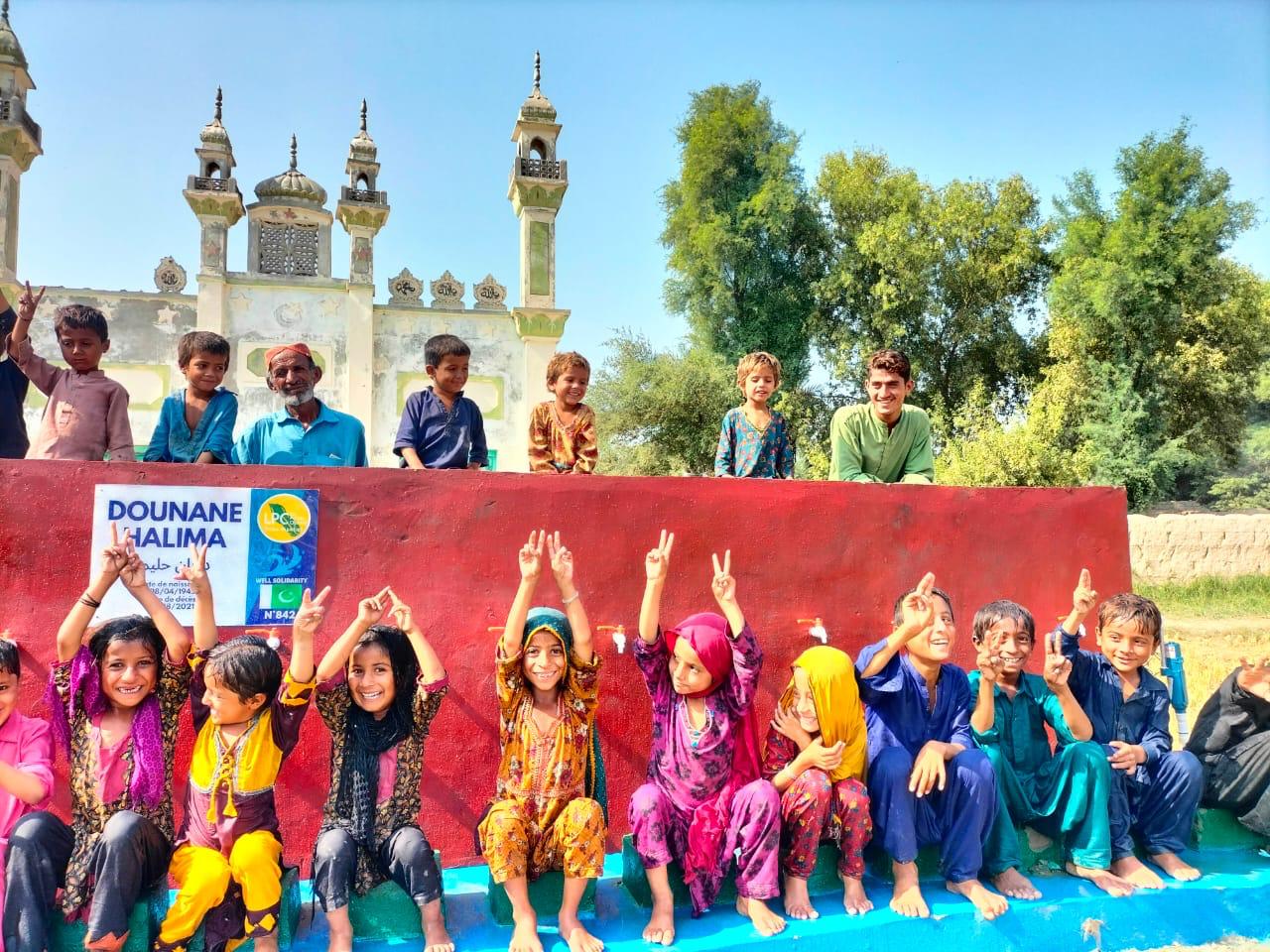
🌱 A space for life and gathering: Integrated seating promotes comfort, social interaction, and creates a community gathering spot around water.
🚀 Fast and durable construction: Built in under 3 months, this model ensures long-lasting service with easy maintenance for the local community.
✅ Advantages
High capacity: this model can serve up to 700 people, making it a collective solution suitable for villages and public spaces.
Convenient distribution: equipped with 5 taps, it allows multiple users to collect water at the same time, reducing waiting time.
User comfort: integrated seating areas provide a suitable space for families, elderly people, and community gatherings.
Adaptable pump: the option to install a manual or electric pump, depending on locally available resources.
Fast implementation: construction is completed in less than 3 months, with delivery ready for use.
⚠️ Disadvantages
Maintenance required: the pump and taps require regular maintenance to ensure proper operation.
Energy dependency: if an electric pump is chosen, a stable energy source (solar or grid) is required.
Higher cost: the price is higher than simpler models due to additional equipment and integrated infrastructure.
📏 Depth and capacity: adapted drilling allowing the well to serve up to 700 beneficiaries, thanks to a collective system designed for large gatherings.
🚰 Distribution through 5 taps: multiple water points operate simultaneously, improving access flow and reducing waiting time for families.
⚡ Manual or electric pump: the system is chosen based on locally available resources, ensuring installation flexibility.
🪑 Integrated facilities: seating areas are built around the well, providing comfort and practicality, especially for elderly people and rest periods.
⏱️ Construction timeline: the entire project is completed in less than 3 months, including drilling, tap installation, and site development.
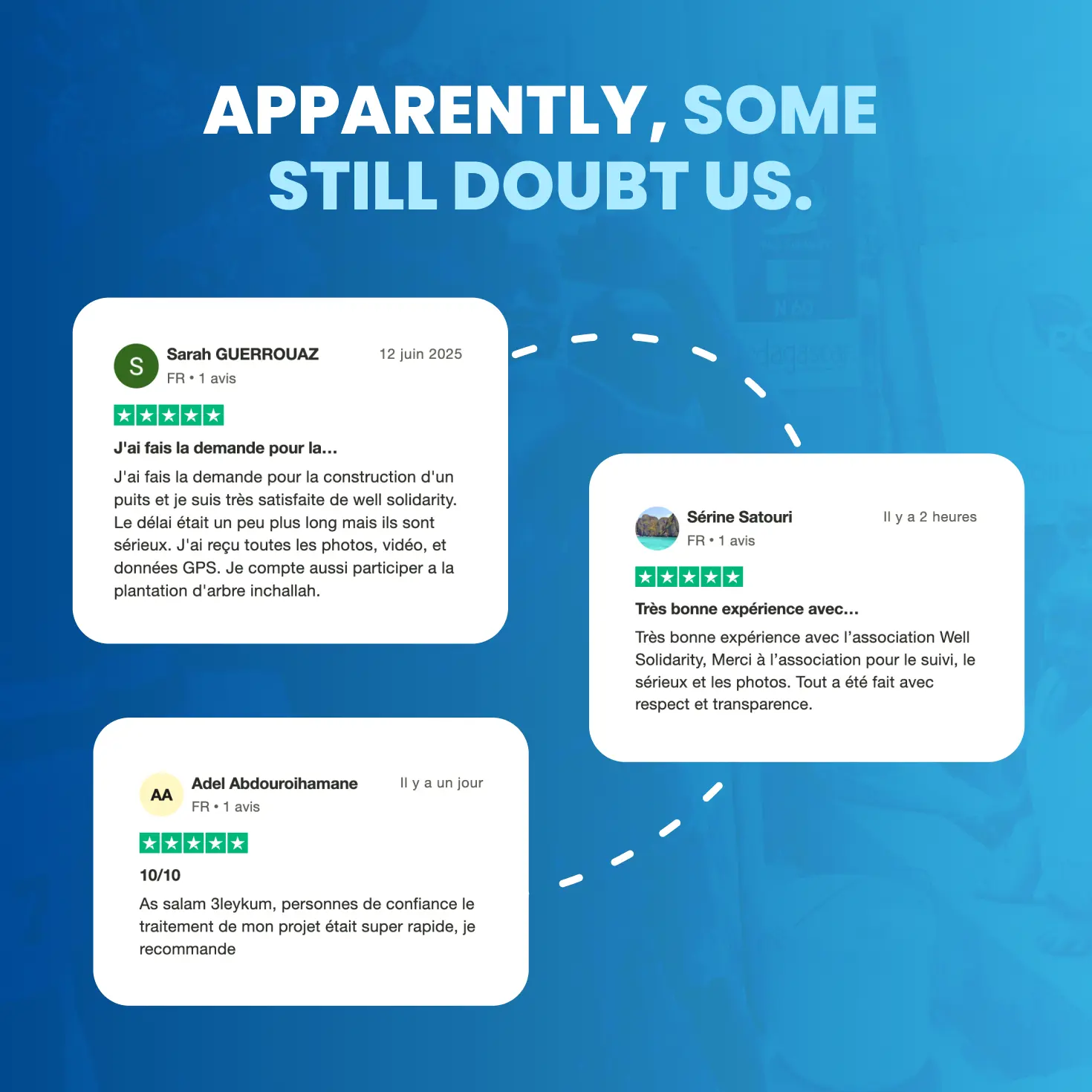
Very responsive, available, and keeps you updated on the progress of the sadaqa, with photos, etc. Truly a great experience! May Allah ease the rest of your efforts.
I’ve ordered a well from Well Solidarity twice and am still extremely satisfied. Nothing negative to say—they are very efficient, always available to answer our questions, and send photos and videos of the construction as quickly as possible. I highly recommend them! Thank you so much to the entire team.
May Allah reward this association. Efficient and quick work. MashaAllah. I will always return to them, InshaAllah.
Thank you to the entire Well Solidarity team—you do amazing work. May Allah reward you in this life and the Hereafter 🤲🤲🤲
Many thanks to Well Solidarity for their simple, fast, and traceable work. I have funded 1 well and 3 trees and will recommend more wells. Incredible experience. Allah is the best and eternal!
🪑 Collective seating: The well is designed with 12 to 16 seats, allowing beneficiaries to wait or use water comfortably.
🚰 Tap distribution: Five outlets are installed, enabling multiple families to access water simultaneously and reducing wait times.
⚡ Pumping system: Depending on the local setup, the well can be equipped with a robust manual pump or an electric pump powered by solar energy or the grid.
📏 Capacity and depth: Drilled to access local water tables, designed to provide consistent water to a large community of up to 700 people.
⏱️ Construction timeline: Complete installation – including drilling, pump setup, taps, and seating – is finished in under three months.
👥 Expanded collective use: This model is ideal for villages, schools, and mosques, where high and continuous usage occurs.
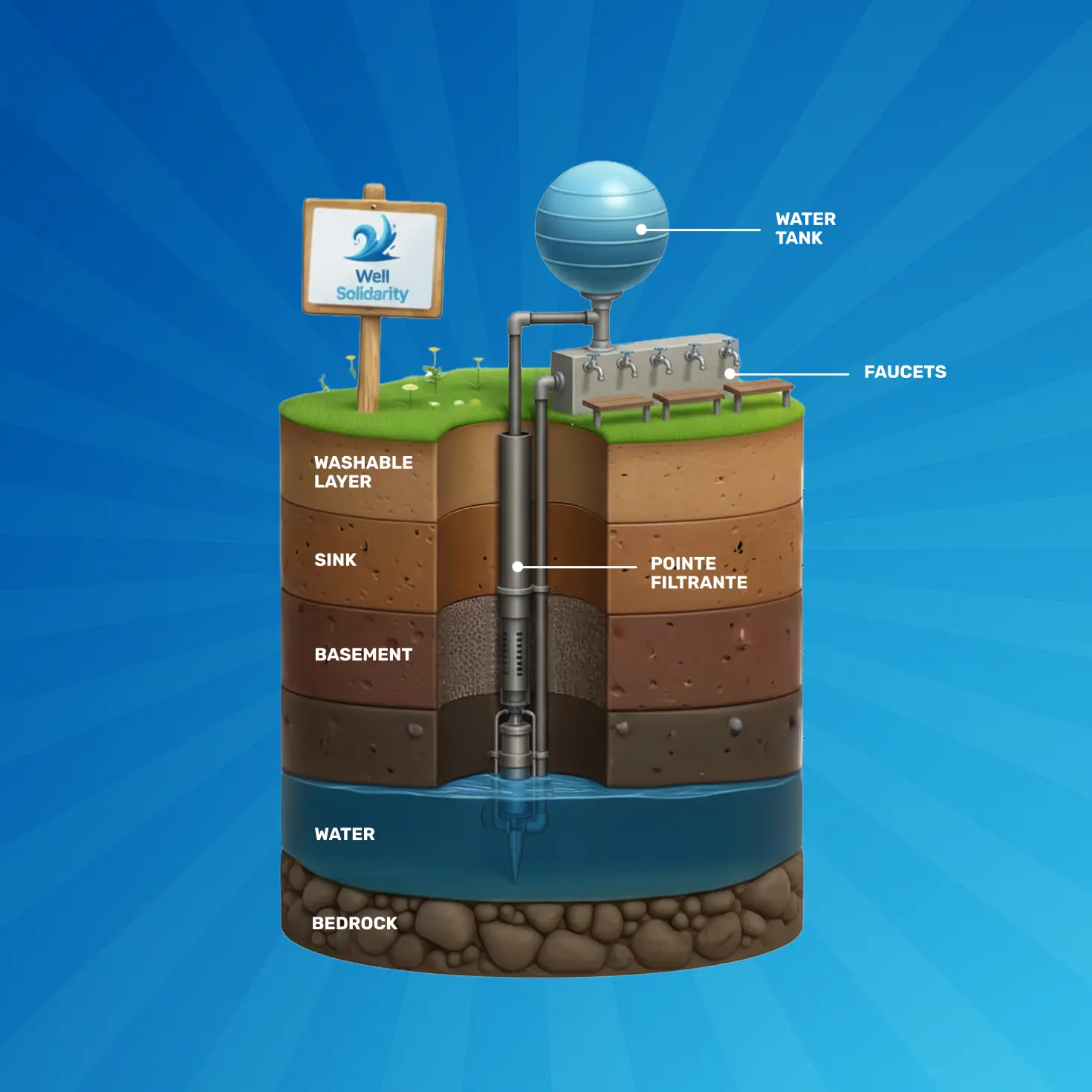
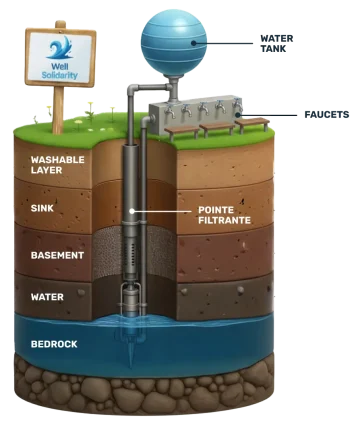
Site selection and preparation: The team begins by identifying a strategic location that is both accessible to the community and suitable for drilling. This step includes checking the groundwater table and soil conditions to ensure the project’s viability.
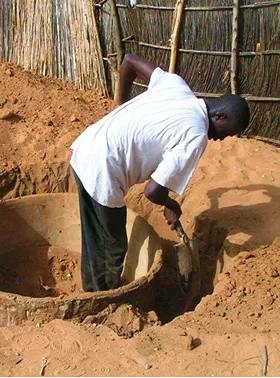
Installation of a solid concrete enclosure: A strong concrete structure is built to secure the well and form the base of the future water point. This element is essential to ensure the stability and durability of the well.
Excavation: Digging is carried out manually or mechanically until the required depth is reached. The goal is to access a reliable water table and provide sufficient flow for collective use.
Pump installation: A manual or electric pump is installed based on local resources (grid or solar energy). This system ensures a steady and practical water supply.
Connection of taps: Five taps are connected to the pump to allow multiple families to draw water simultaneously. This setup helps organize access and reduces waiting times.
Seating area construction: 12 to 16 seats are built around the well, creating a comfortable and social space suitable for gatherings and for the elderly.
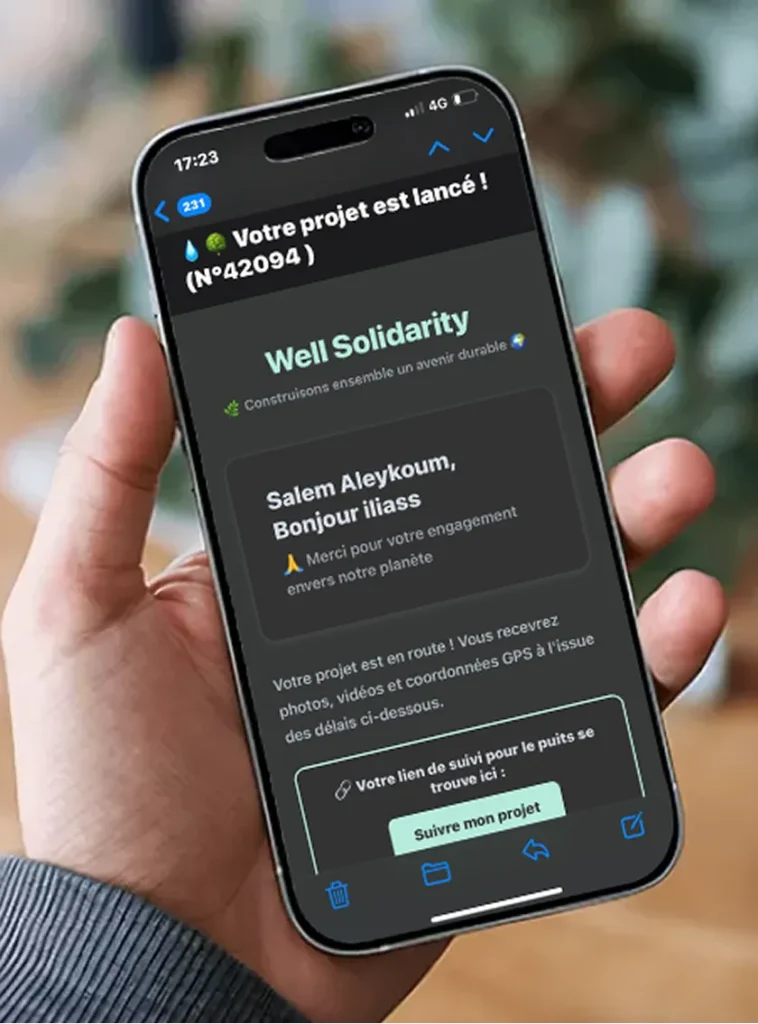
Final checks and handover: Water quality is verified, finishing touches are secured, and the well is officially handed over to the beneficiaries, along with GPS coordinates and visual documentation.
Providing access to water by building a well is considered one of the most valued charitable acts in Islam, as its benefits are long-lasting and touch an entire community.
According to a hadith reported by Muslim, the Prophet Muhammad (peace and blessings be upon him) said:
“When the son of Adam dies, his deeds come to an end except for three things: ongoing charity (sadaqa jariya), beneficial knowledge, or a righteous child who prays for him.”
A well perfectly embodies this concept of ongoing charity: as long as families continue to use this precious water, the donor continues to receive rewards, even after their passing.
In general, the full project (drilling, tap installation/commissioning, and seating installation) is completed in under [get_acf_subfield field=”puits_places_assises” post_id=”option” path=”delais”].
This model is designed to meet the needs of around [get_acf_subfield field=”puits_places_assises” post_id=”option” path=”nombre_beneficiaires”] beneficiaries, making it a suitable solution for large villages, mosques, or schools.
It’s a layout/design around the water point that includes 12 to 16 seats, allowing users to wait or rest, while also making this place a friendly and practical space.
A conventional well serves up to 500 people using a manual bucket, whereas the “well with seating” incorporates a pump (manual or electric), several taps, and a shared setup designed for larger gatherings.
Yes, the water is tested before commissioning to ensure it is clean and suitable for daily consumption.
Absolutely. In Islam, building a well falls under ongoing charity (ṣadaqa jāriya). The Prophet Muhammad (peace and blessings be upon him) said:
“When the son of Adam dies, his deeds come to an end except for three things: ongoing charity (ṣadaqa jāriya), beneficial knowledge, or a righteous child who prays for him.”
It depends on the local context: a sturdy manual pump may be preferred in areas without reliable power, while an electric pump (often solar-powered) is installed when possible.
The taps and the pump require regular monitoring/maintenance to ensure they function properly. Local teams are made aware of these practices to extend the lifespan of the installation.